About John Tottenham


John Tottenham is the author of one novel, numerous essays, and three volumes of poitry: The Inertia Variations (Kerosene Bomb 2004 & 2010), an epic cycle on the subject of work-avoidance, indolence and failure; Antiepithalamia & Other Poems of Regret and Resentment (Penny-Ante 2012), a sequence of mean-spirited love poems with particular respect paid to the institution of marriage, and The Hate Poems (Amok 2018), in which he adopts the persona of an embittered middle-aged man with frustrated artistic aspirations and a healthy ambivalence towards the accepted pieties of romantic involvement.

A unique purveyor of “magnanimous misanthropy” and “magical cynicism,” Tottenham has been described as “our preeminent contemporary poete maudit.”

His paintings and drawings have been exhibited in solo shows at galleries in Los Angeles and New York.

His essays and criticism appear frequently in Artillery, the LA Review of Books, and other periodicals. His long-standing column in Artillery is widely read.

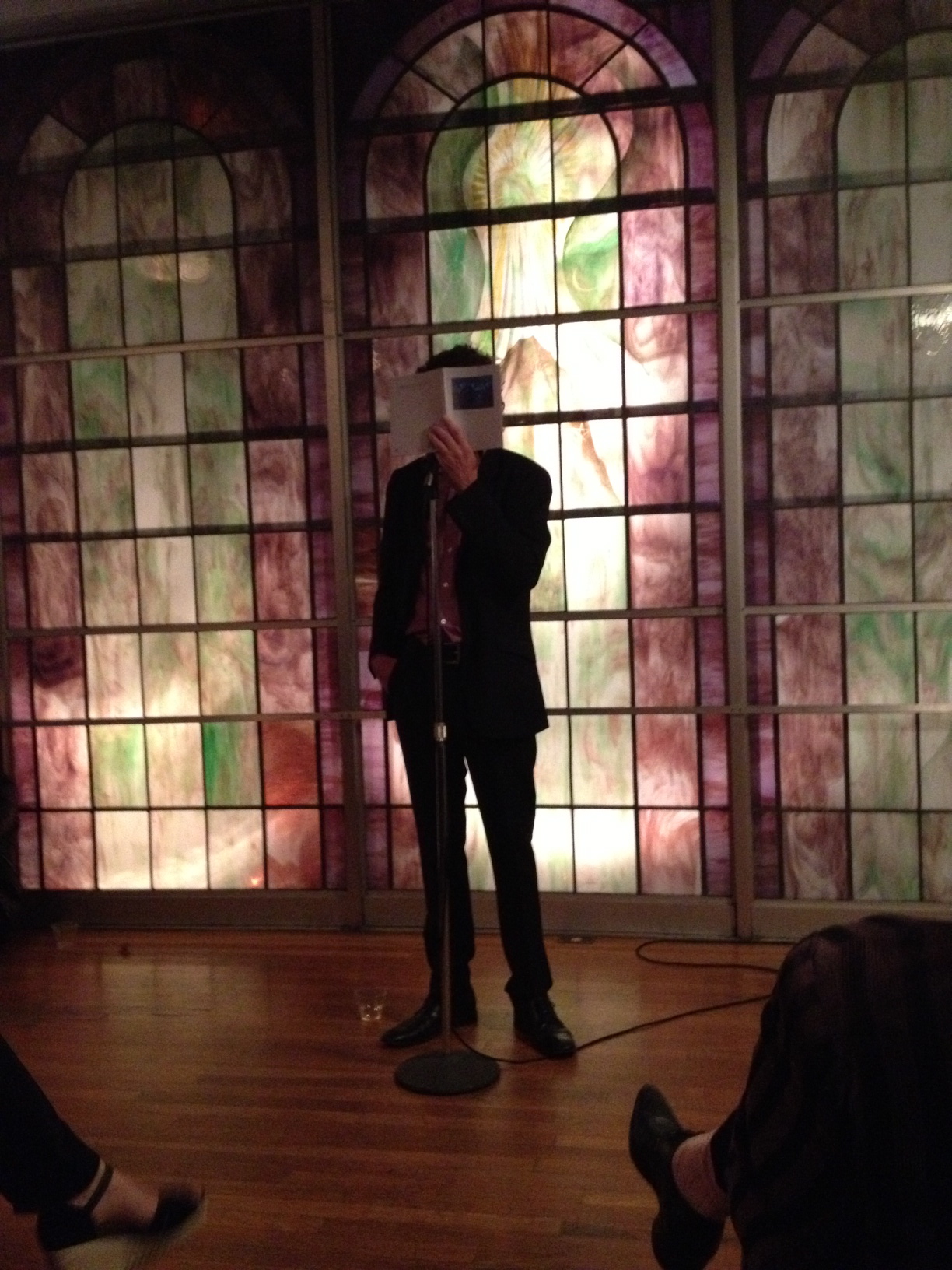
Tottenham performs regularly in Los Angeles – at rock venues, bookstores, bars and comedy clubs. His performances include elements of stand-up and have been described as “confrontational self-deprecation.”

A new collection of poitry, Fresh Failure, will be published by Hat & Beard Press in the autumn of 2023.


29 Responses to “About John Tottenham”

  1. Emily Lee's avatar

    I enjoyed your sense of humor in your bio in Artillery. For some reason, I thought I’d let you know.

  2. stan hicks's avatar

    I started a motorcycle club recently,we call ourselves the Sons of Apathy.Your words resonated with me,if a motorcycle group can have a Poet Laureate,and why not,then you are ours.

  3. Stefano Fontana's avatar

    I’ve just discovered you thanks to “no way jose”. Few words in a movie and it was enough; i want to know more about you and your writings. I love to read and when i feel satisfied enough of what i’m doing, i love to write as well. Rarely. But fortunally i have a tough job in a factory already 🙂
    Anyway, i’m looking forward to read your stuff very much.
    It was a very good comedy this one.
    Stefano. Italy

  4. angelo bonavera's avatar

    I like your poems. That’s all

  5. Paulie Wheelbarrowsonsmith's avatar

    I feel like a creep, I’ve looked at everything on the internet about you and your work. And wish there was more. I also wish you read a wider variety of poems, and maybe that there were more interviews or something. Also maybe I have a crush on you. But I hope it goes away!

  6. Little Mouse's avatar

    you should write more stories……………

  7. CJ's avatar

    please make another book!

  8. はいかう's avatar

    handsome poet

  9. Saltmarsh's avatar

    Just got a nod from terry(?) mentioning you and me in memphis

  10. orchestro's avatar

    They read some of your work recently in Italy on the radio:

  11. James Goodwin's avatar

    I like you. You’re likable.

  12. Dan Phillips's avatar

    Hi John, I’m another “failed visionary” but published poet of long standing or collapsing. We met briefly at Cafe Figaro when we had a few pleasant words and then again by chance at Skylight Books where you touted me most “tottingly” to not buy your “terrible” book with the kitty cat on the cover! However, I am perversely enjoying your work online anyway.
    Good to meet you again not on Facebook where I’m faceless. Give me a shout out if you so desire. Dan

  13. KeeF's avatar

    I would like to buy a painting

  14. Abby's avatar

    I enjoyed reading yyour post

  15. Absinthe's avatar

    you’re a strange and cruel man

  16. Roger's avatar

    Do you still support Wolves?

  17. PP's avatar

    you don’t deserve to be happy

  18. Andrew Winer's avatar

    Congratulations on your novel, John, and on the superb review in the NYRB.

    -Andrew

  19. bert hirsch's avatar

    enjoyed your book Service. Wrote the following review on Goodreads. Good luck!

    If you appreciate sarcasm and cynicism within a setting filled with literature, writing, books, music, current cultural trends, politics and alienation, you will enjoy this read.

    John Tottenham is an amusing self-referential wordsmith.

    The protagonist, named Sean, is an ex-journalist now subsiding as a bookstore clerk who stuffs unpaid credit card debt notices into trash bags ignoring “these tedious importunings and hoped my oppressors would eventually give up and go away.”

    “A flaneur in utopia, with nowhere to flan”, he muses, as he passes a once popular and reasonable family owned restaurant now taken over by developers. Looking for an old-time bar he finds “one last perforation into the sacred anomie of the past.”

    He maintains and relishes a good dose of schadenfreude for those writers who are published and for an ex folk band member who still has cache, though his career ended years ago.

    Reading a book on a crashed one hit wonder he mentions Townes Van Zandt, ‘both died in their early to mid-fifties: a decade I now floundered upon the brink of, looking down into it as if it were a pit that would swallow up the remains of hope and promise.”

    Discouraged, disheartened he decides to NOT write anymore but shortly succumbs to getting closer to death: “the worst part of it was that I hadn’t created anything that would outlive me” and decides to buy $300 of meds to help him sit still enough to start writing again.

    Throughout the book he muses on books and mentions several including Confessions of a Crap Artist (Philip K. Dick), 4 Dada Suicides and Kundera’s, The Unbearable Lightness of Being – all of which seem reflective of his current mental state.

    In other takes he critiques other writers in a mocking humorous way which further reveals the character’s negativity and authorial talent:

    Regarding Cormac McCarthy – “I once forced myself to wade through one of his novels…it was heavy work, the author’s straining brow was visible as he forced out his turgid prose, which combined the worst qualities of Faulkner and Hemingway – exhibitionistic prolixity and grueling masculinity – with no flow, no humor, and no feeling (the literary equivalent of NFL football: all effort, no rhythm, all stop and start) while continually tripping the reader up by inserting ill-fitting obscure words into his laborious sentences for no apparent purpose other than to flaunt his sesquipedalian proclivities. I could do better than that, but that would entail coming up with plot, character and dialogue, of which I am incapable.”

    This long quote exemplifies Tottenham’s unique humorous tricksterism. He is a talented wordsmith, knowledgeable of literature and is able to self-mock by mocking others with an enormous tongue in cheek proclivity. The fact that I love Cormac McCarthy’s books (I have read most all of them) only makes this passage juicier and more entertaining.

    At other times he is ruthless in his comments on customers who stroll through the bookstore. The mistaken title of the book (Service) misrepresents his scolding and contempt for most everything that occurs in the bookstore.

    “After dealing with requests for “where the restroom is? I returned to my light reading: a drug memoir written by a musician or a musical memoir written by a drug addict – it was hard to say which.”

    Bad Yelp reviews follow him to which his manager confronts him with regularity.

    A customer asks for a book recommendation: “I don’t have the energy…do I have to read the fucking book for you too? Its not as if I’m going to be compensated for the service. You throw two dollars at a bartender for popping the top off of a beer bottle. I give you a book that’s going to change your life and what do I get in return? Nothing.” ‘Maybe you’re in the wrong profession’, replies the customer – ‘no shit’ I said.”

    About his own efforts a younger colleague asks to read some chapters to provide feedback and Sean (the narrator) replies “I don’t know about that. I’m feeling more and more uneasy about it. Its an act…a work…of great narcissism and treachery.” His young friend replies “Aren’t they all though” to which Sean says “there are degrees, and I have exceeded the bounds of propriety. I’ve thrown a few people under the bus. I only hope they emerge unrecognizably disfigured.”

    (Above is Tottenham’s self-referential talent-poking his own effort -the book – the reader is reading entitled, Service)

    At another time he says to his younger informal editor: “If I remove all the self-pity there won’t be much left” and his co-worker responds, “all the portrayals are negative…it’s just not the women. It’s across the board. Everyone’s unlikeable.” I laughed reading this and for some reason started comparing Tottenham to Lenny Bruce.

    The following put-downs demonstrate this talent:

    Where he works is now “more of a book-lined corridor leading to a café than an actual bookstore, out in force tonight the ululating dilettantes, the braying cacologists, the ready-made phrase sprouters and the fake exaggerators, mutilating the air with sloppy diction and ersatz enthusiasm.”

    In the bookstore vacuous people ask for books whose titles are made up by Tottenham, a humorous take on what sells these days:

    Fuck Fame, Boredom, Failure, Frustration, (“all the best one-word titles have been taken”), Contempt, The Death of the Novel, Damaged Goods, The Habit of Absence, I Hate Honey…
    And as I read through them all, I couldn’t but muse that Tottenham’s own book, Service, could easily be entitled, Bookseller’s Blues.

    Another discussion with his editor colleague: “You’re going to be accused of sexism” … “if I am lucky enough to be accused of anything. My main concern at this point is I’m writing for a limited readership” … “that’s fine”, his friend replies, “as Henry James said, ‘three thousand good readers is the most you can hope for.’ ”

    In another passage we are presented with a pretty good description of the world of reading and writing:

    “Everybody listens to music, but not many people read anymore…Reading requires more mental effort than any other art. Music is a soundtrack, a stimulus, a driving force toward other things; watching a movie is an entirely passive act, something to do when one is too tired, bored, or lazy to do anything else; looking at a painting makes very little demand upon one’s time or mental energy. Writing is the highest form of art, the others are shortcuts.”

    Again Sean (who seems like a stand-in for Tottenham) muses; “the self-conscious novel is a lower form of literature, but it’s all I’m capable of: a tired exercise in good old-fashioned modernism.”

    Reading this passage, I knew that this was indeed the kind of novel I was reading, and which I gravitate towards as a reader and a writer; wondering what it says about me and my own tastes and style. Indeed, much of current “modern” literature is of such form and content (see Rachel Cusk, et al).

    In the end, his financial liabilities and frustrations get the best of him. Sean laments his solitary life, a failed artist, his middle-aged friends have moved on, with no supportive or well-to-do spouse, patron or stipend from a grant foundation, his future prospects grow dim.

    This book is a fun read. The pages fly by as one is entertained by John Tottenham’s satire, cynicism, humor, word smithing, and insights of the current cultural zeitgeist.

    Another recent read which seems like a good companion piece is Blue Rain by Hari Kunzru, he, too, a British novelist writing about the journey artists take in the face of fame or fortune or its absence, thereof.

Trackbacks

Leave a reply to Paulie Wheelbarrowsonsmith Cancel reply